

Extreme PRO USB 3.2, the field manual
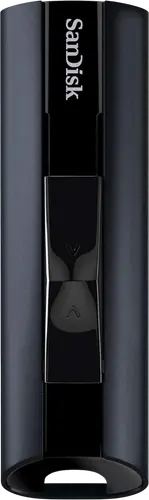
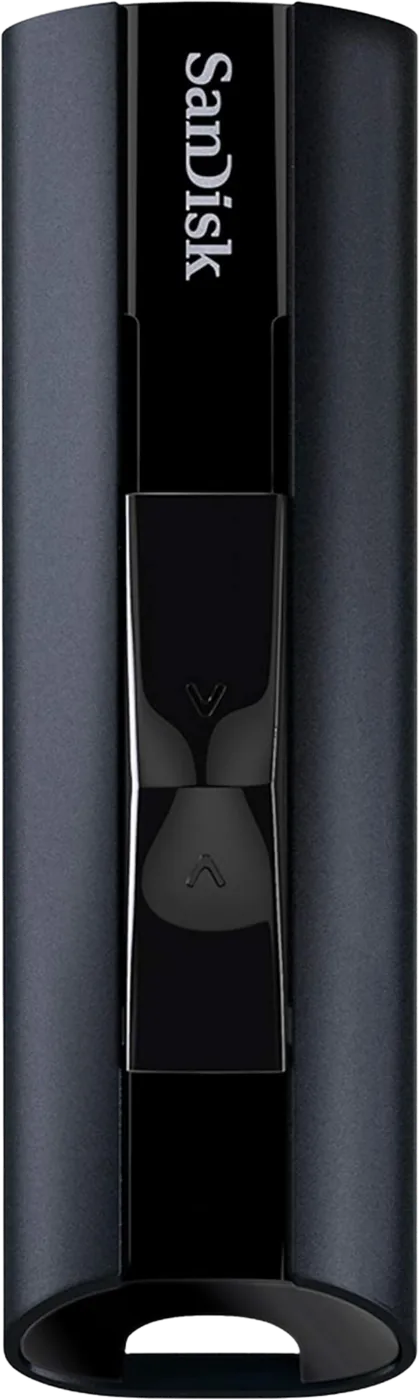
Booth briefing. The pen drive the booth agrees on. The SanDisk Extreme PRO USB 3.2 Solid State Flash Drive is a one-piece aluminium USB-A stick with a sliding connector, rated by SanDisk at up to 420 MB/s read and 380 MB/s write, in 128, 256 and 512 GB, with a lifetime limited warranty. It is the stick named first in every DJ buyer’s guide read for this page, and the one Pioneer DJ staff named, on their own forum, as the best they had found for the CDJ-3000. SanDisk list its interface as USB 3.2 Gen 1, the 5 Gbps generation older players have the fewest problems with.
Fast Lane
The five things that decide your gig
The five things about the Extreme PRO that change what happens next, if you are reading this in the booth. All five are explained in full further down this page.
Pioneer DJ staff name it. No other stick on this site gets that.
USB 3.2 Gen 1 is the generation older players complain about least.
Staff in the same forum say older players sometimes have issues with USB 3.1 and 3.2 drives while working with USB 3.0 ones. Gen 1 is USB 3.0 speed by its later name, and this drive is Gen 1.
380 MB/s write means the export finishes before the coffee does.
Write speed is what an export uses. Most sticks publish a read speed and hide the write; SanDisk publish both, and the write figure is the reason this stick costs what it does.
One piece, sliding connector, aluminium. Built for a keyring.
No cap to lose. The slider is the part to check on an old one: a slider that no longer locks out is a connector that wobbles in a CDJ.
The file system still decides the gig.
A staff recommendation is about the hardware. What a new Extreme PRO is formatted as is a choice for computers. Format it to what your players read, from the USB matrix, before the first export.
If something goes wrong
The player does not read the stick
Short answer. Three things decide this before the Extreme PRO itself does: the file system it is formatted in (the matrix says what each player reads), the library format you exported (OneLibrary or Device Library), and on an Engine OS unit the partition style (MBR). A stick that slides in and shows an empty browse screen is almost never a broken stick.
When it is the stick. A stick that worked last week and shows nothing this week, on a player that reads your other stick, has usually started to fail. Play from the other one. Connecting a stick to a player never deletes what is on it, so nothing is lost by trying.
Avoid it next time. Export to two sticks, test both on a player, and retire a gig stick on a schedule rather than after a failure.
Compatibility
What the maker names, and what the player makers do not
Short answer. SanDisk state the Extreme PRO works with any USB 3.0 port for the rated speed, per SanDisk’s footnote; the page names no operating system. This is the one pen drive on this site a player maker’s own staff name: on the Pioneer DJ forum, in the thread on drives for the CDJ-3000, staff wrote that the best they had found were the SanDisk Extreme Pro USB 3.0 and the Corsair Voyager GTX 3.0, both at 128 GB. SanDisk list this drive’s interface today as USB 3.2 Gen 1, which is the same 5 Gbps generation under its later name.
What decides it instead. The file system and the library format, both of which are per player and both of which are on the USB compatibility matrix. A drive the maker says is compatible with macOS is a drive macOS can format; it is not a statement about any player.
The connector question. USB Type-A in a one-piece aluminium body with a sliding connector. No cap, no cable, the connector every CDJ and most XDJs have.
Features explained
Capacity, speed and connectors
- Interface
- USB 3.2 Gen 1 (5 Gbps), backward compatible with USB 3.0 and 2.0
- Capacities
- 128 GB, 256 GB, 512 GB
- Sequential read
- up to 420 MB/s
- Sequential write
- up to 380 MB/s
- Connector
- USB Type-A, sliding connector, aluminium body
- Size
- 71 x 21 x 11 mm
- Weight
- 17 to 18 g
- Warranty
- lifetime limited warranty
SanDisk’s footnote: the quoted speeds need a USB 3.0 port on the host and vary with the host device, usage conditions and capacity. SanDisk also offer an app that creates an encrypted vault on the drive; keep the music outside the vault, since a player cannot open one.
Professional tips
Decisions to make before the stick goes on the keyring
Buy two, and make them the same. Two Extreme PRO sticks with the same export beat one bigger stick. How big a gig stick needs to be is smaller than most DJs think, and the second one costs nothing on the day you need it.
Format it yourself before the first gig. What it ships formatted as is a choice for computers. Format it to what your players read, export, and test it on a player at home.
One job. A gig stick that also carries documents, photos and the last set's recording is a gig stick that gets pulled out of a laptop without ejecting. Keep it for music and eject it every time.
Retire it on a date, not on a failure. Flash memory wears. A stick that has done a year of weekly exports has earned its replacement before it earns a blank screen.
Firmware, drivers and manuals
Where the maker keeps the rest
Frequently asked questions
Quick answers
- Is this the stick Pioneer DJ recommend?
- Pioneer DJ staff named it on their forum as the best they had found for the CDJ-3000, alongside the Corsair Voyager GTX. That is a staff answer in a thread, not an official compatibility list.
- Is it USB 3.0, 3.1 or 3.2?
- SanDisk list it today as USB 3.2 Gen 1, backward compatible with USB 3.0 and 2.0. Those are the same 5 Gbps generation under successive names; the staff answer calls it USB 3.0.
- What capacity for a gig stick?
- 128, 256 or 512 GB, per SanDisk. The staff answer named 128 GB. Two 128 GB sticks with the same export beat one 512 GB stick alone.
- Is it the same as the SanDisk DJ Flash Drive?
- No. The DJ Flash Drive is a newer dual-connector USB 3.2 Gen 2 drive co-branded with AlphaTheta, with its own page under AlphaTheta on this site.
Related products
Playing soon and it is not working?
Start Emergency ModeKeep the Emergency Card
We will email you the printable PDF so it is on your phone before the next dark booth. Occasional notes that save gigs. No spam, unsubscribe in one click.
Registering is free and counts everywhere on Save My Gig. We send a confirmation email first. Your address is stored with Brevo, our email provider. Unsubscribe any time. Privacy
Sources: SanDisk’s Extreme PRO USB 3.2 product page and the Pioneer DJ forum thread on CDJ-3000 drives with the staff answer, read 19 September 2026. Specifications theirs, priorities ours.